
Buying a fundus camera is one of the highest-impact equipment decisions an eye care practice will make. The right retinal imaging system sharpens your diagnostics, speeds up patient flow, and pays for itself through new revenue streams like diabetic retinopathy screening and teleophthalmology. The wrong one leaves you with soft captures, frustrated staff, and a device that collects dust in the corner. This Fundus Camera Buying Guide walks you through the main types, the features that genuinely move the needle, and how to match a model to your practice so you can invest with total confidence.
What A Fundus Camera Actually Does For Your Practice
A fundus camera captures high-resolution images of the retina, optic disc, macula, and retinal vasculature. Those images are the backbone of diagnosing and monitoring glaucoma, macular degeneration, hypertensive retinopathy, and diabetic eye disease. Beyond clinical value, documented retinal photography strengthens your medico-legal records, improves patient education (nothing convinces a patient like seeing their own retina), and unlocks billable screening programs. In short, the right camera is a growth tool, not just a diagnostic one.
The Main Types Of Fundus Cameras
Understanding the categories is the first step in any smart purchase. Most practices choose from five formats.
Non-Mydriatic Fundus Cameras
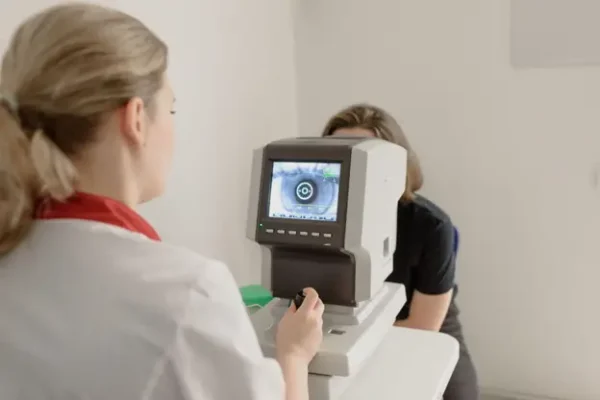
Non-mydriatic cameras use infrared alignment to image the retina without dilating drops. They are fast, comfortable, and ideal for high-volume screening because patients are in and out in minutes. Popular workhorses include the Nidek AFC-330 Non-Mydriatic Auto Fundus Camera and the Kowa Nonmyd a-D Non-Mydriatic Digital Fundus Camera, both built for efficient day-to-day clinic use.
C And Angiography Imaging
Mydriatic imaging uses dilating drops to widen the pupil, which can deliver richer detail for complex cases. Loosely related is fluorescein angiography (FA), which tracks dye through the retinal vessels to assess diabetic and vascular disease. If your caseload includes these workups, look for a system that supports advanced modes rather than color photography alone. The iCare EIDON FA TrueColor Confocal Imaging System adds fluorescein angiography to high-resolution confocal imaging in a single platform.
Handheld And Portable Fundus Cameras
Portable cameras have transformed community screening, home visits, pediatric imaging, and outreach programs. If you work across multiple sites or serve patients who cannot sit at a tabletop unit, a handheld like the Optomed Aurora IQ Handheld Fundus Camera delivers clinic-grade images anywhere you carry it.
Confocal And Scanning Laser (SLO) Systems
Confocal and scanning laser ophthalmoscopy produce exceptionally crisp images with superior contrast, even through small pupils or media opacities like cataracts. These systems are the choice for practices that prioritize image quality above all else. Standouts include the iCare DRSplus TrueColor Confocal Fundus Camera and the I-Optics EasyScan SLO Fundus Camera.
Ultra-Widefield Retinal Imaging
Standard cameras capture 30 to 45 degrees of the retina. Ultra-widefield systems image up to 200 degrees in a single shot, revealing peripheral pathology that conventional units miss entirely. For retina specialists and forward-looking practices, the Optos Daytona RG AF Retinal Camera sets the standard for panoramic imaging.
Key Features To Compare Before You Buy
Once you have narrowed the type, weigh these features against your clinical priorities and budget.
Field Of View
More degrees mean more retina in every capture and fewer missed lesions. Match the field to your patient population, screening programs, and specialty.
Image Resolution And TrueColor
Higher megapixels and accurate color reproduction make subtle changes far easier to detect and track over time. TrueColor confocal systems, in particular, render tissue with striking clarity.
Non-Mydriatic Operation And Auto-Capture
Automatic alignment, focus, and shooting cut training time and let non-specialist staff produce consistent images. This is a major driver of throughput and return on investment.
Autofluorescence And Fluorescein Angiography
If you manage macular disease or vascular pathology, built-in autofluorescence and FA capability expand your diagnostic reach without a second device. The iCare EIDON AF Blue Autofluorescence Confocal is a strong example of advanced imaging in a single platform.
Portability And Footprint
Tabletop units suit fixed clinics, while handhelds win for mobile and space-constrained settings. Be honest about your room layout and workflow.
Software, Connectivity, And AI
Look for DICOM compatibility, easy EMR integration, cloud storage, and emerging AI screening tools. Good software turns a camera into a connected part of your practice rather than an island.
Budget And Value
Price matters, but cost per useful image matters more. A reliable, well-supported camera at the right price protects your margins for years.
How To Choose The Right Model For Your Practice
High-volume screening clinics should prioritize non-mydriatic, auto-capture speed. The Canon CR-2 AF Non-Mydriatic Retinal Camera and the Nidek AFC-330 keep queues moving.
Multi-specialty and hospital settings benefit from premium confocal or ultra-widefield imaging that handles the toughest cases, such as the iCare DRSplus or the Optos Daytona RG AF.
Practices that want premium image detail for routine and screening work will appreciate the Carl Zeiss Visucam Pro NM Retinal Camera, which pairs legendary ZEISS optics with straightforward non-mydriatic capture at 30 and 45 degree fields.
Mobile, rural, and outreach providers need the freedom of a handheld like the Optomed Aurora IQ or the Kowa Genesis-D, both built for imaging outside a fixed clinic.
Budget-conscious buyers who still want dependable quality can start with value options like the Nidek NM-1000 Non-Mydriatic Fundus Camera or the Nidek AFC-230 Non-Mydriatic Fundus Camera and scale up later.
A simple rule of thumb: pick the type first, confirm the two or three features you cannot compromise on, then choose the best-supported model within your budget.
Ready To Invest In The Right Fundus Camera?
The best fundus camera is the one that fits your patients, your workflow, and your growth plans, not just the one with the longest spec sheet. Every model mentioned in this guide is available and fully supported at Sea Ophthalmic, with expert guidance to help you match features to your goals.
Browse the complete range on our Fundus Camera category page, compare models side by side, and reach out to our team for tailored advice. Your next retinal imaging system, and the sharper diagnostics that come with it, is only a click away.